
It’s been a few weeks since I last posted, and it’s always hard to get back in the saddle. I don’t have one big take, so here are three smaller things I’ve been thinking about:
The future of OpenEvidence
As a non-MD, I don’t have access to OpenEvidence (although I wish I did, if only as an upgrade for my childhood WebMD habit). I’ve been trying to write about this model as part of a theory that purpose-built models will drive the future of AI, especially in healthcare.
Related articles:
Of course my major concern with OpenEvidence — which I discussed briefly in this podcast episode I did with Organized Money — is that the revenue model is based on advertising from primarily pharmaceutical companies. I would feel much better about OpenEvidence’s long-term future and ability to help physicians if the company pursued an institutional subscription model without allowing advertising. The potential to surface papers funded by a pharmaceutical company, for example, or to emphasize a certain drug recommendation seems obvious.
The Senate Aging Committee’s recent hearing on foreign ownership of drug supply chains
No doubt readers of this newsletter are aware of my obsession with drug supply chains. The Senate Aging Committee recently hosted a hearing on foreign ownership and control over U.S. drug supply chains, for both generic and more cutting-edge drugs. If you’re as interested in this topic as I am, it’s worth reviewing!
Microplastics in Zyn pouches
STAT News recently published a long article about how the FDA decided to approve Zyn nicotine pouches for sale even as the agency doesn’t know what the pouch material is made of. A scientist formerly employed by the FDA’s Center for Tobacco Products, Christy Leppanen, who had been leading a project on microplastics, found that she couldn’t get the pouches to dissolve during basic testing, suggesting that they contain plastics.
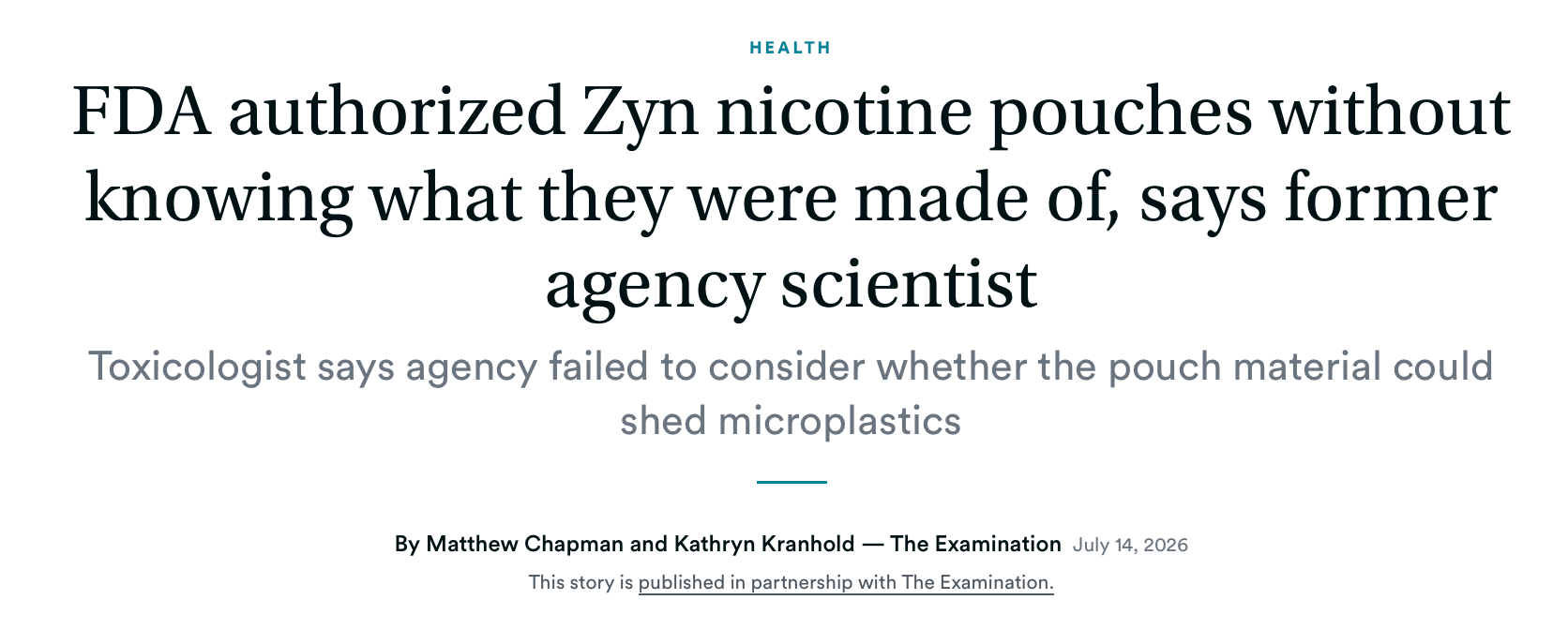
The reporters on this article received no comment from the FDA or Philip Morris International, the manufacturer of Zyn pouches, elaborating on the material comprising the pouches. In fact, it seems that no one at the FDA has this information or cared to figure it out before deciding to approve the pouches for sale.
Nevertheless, in January 2025 the FDA authorized Zyn, with a determination that appeared to be signed by Lepannen — who in fact hadn’t signed the determination, and who had been on vacation on the date the determination was signed.
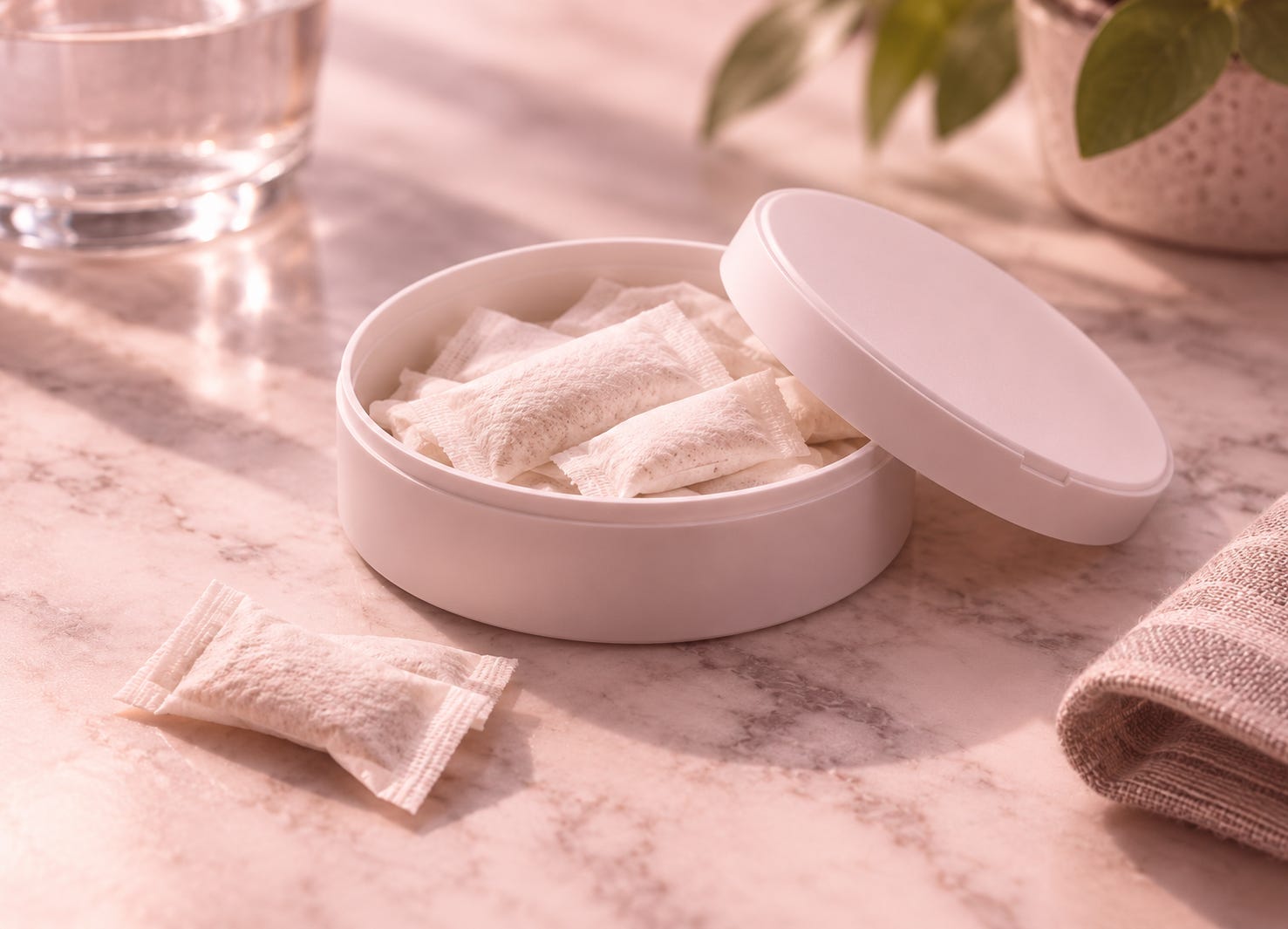
All of which makes it even more bizarre that high-ranking health officials, including HHS Secretary Robert F. Kennedy, Jr., are using and promoting these pouches, occasionally implying that they’re something of a health supplement. Even the ChatGPT-generated image that I prompted for the header, for which I requested an “unbranded can of nicotine pouches,” has an unexpected health tinge to it. I imagine it’s drawing from the general marketing that pouches are a healthier way to consume nicotine — but needless to say, it’s far from a health product. Especially if it’s made out of microplastics!