

Two years ago, I published a long article in American Affairs entitled “A National Defense Strategy for Generic Drugs.” I didn’t expect anyone to read it. Thankfully, that wasn’t true, and I ended up hearing from Rush Doshi, currently the director of the China Strategy Initiative at the Council on Foreign Relations. He was in the process of convening a working group on the topic of pharmaceutical active ingredients and asked if I would join. Ultimately, I ended up co-chairing the group with Rush and CFR scholars Thomas Bollyky and Prashant Yadav.
The group, which included academics and policy and industry experts, spent a year discussing and studying the issue of pharmaceutical reliance on China. Then we wrote a report that my Microsoft Word estimated at around 29,000 words when all was said and done. The report is finally published and available at the button below.
Similar reports have been published before but no major policy changes have actually happened, so we wanted to be much more granular about the problem and potential policy options. For example, previous reports have covered that the U.S. is dependent on China for 40-80% of generic drugs — but that’s a wide range. Our report went a layer deeper.
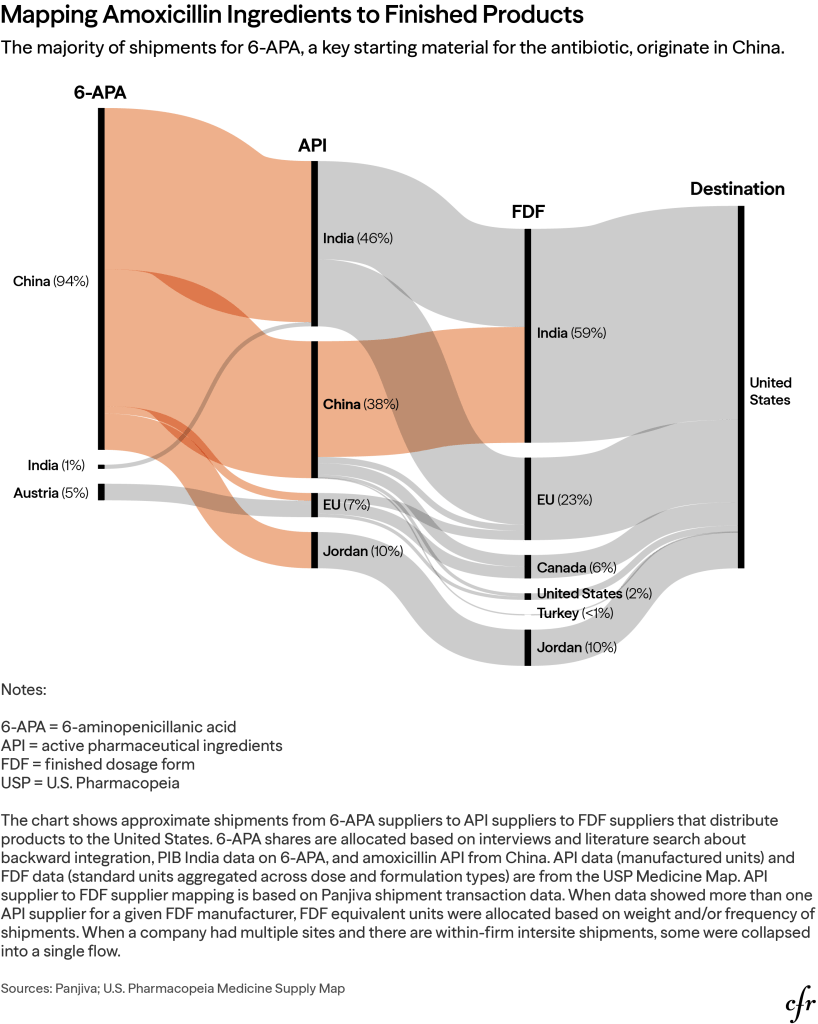
Generic drugs that flow to the U.S. market are largely manufactured in India, Europe, and the United States. But the active ingredients that comprise those drugs as well as the key starting materials that are synthesized into the active ingredients are largely solely sourced from China.
With amoxicillin, a common antibiotic, for example, over 80% of the finished drug form (FDF) in the U.S. market comes from India and the EU. But those countries themselves are largely dependent on China, making the U.S. also highly dependent.
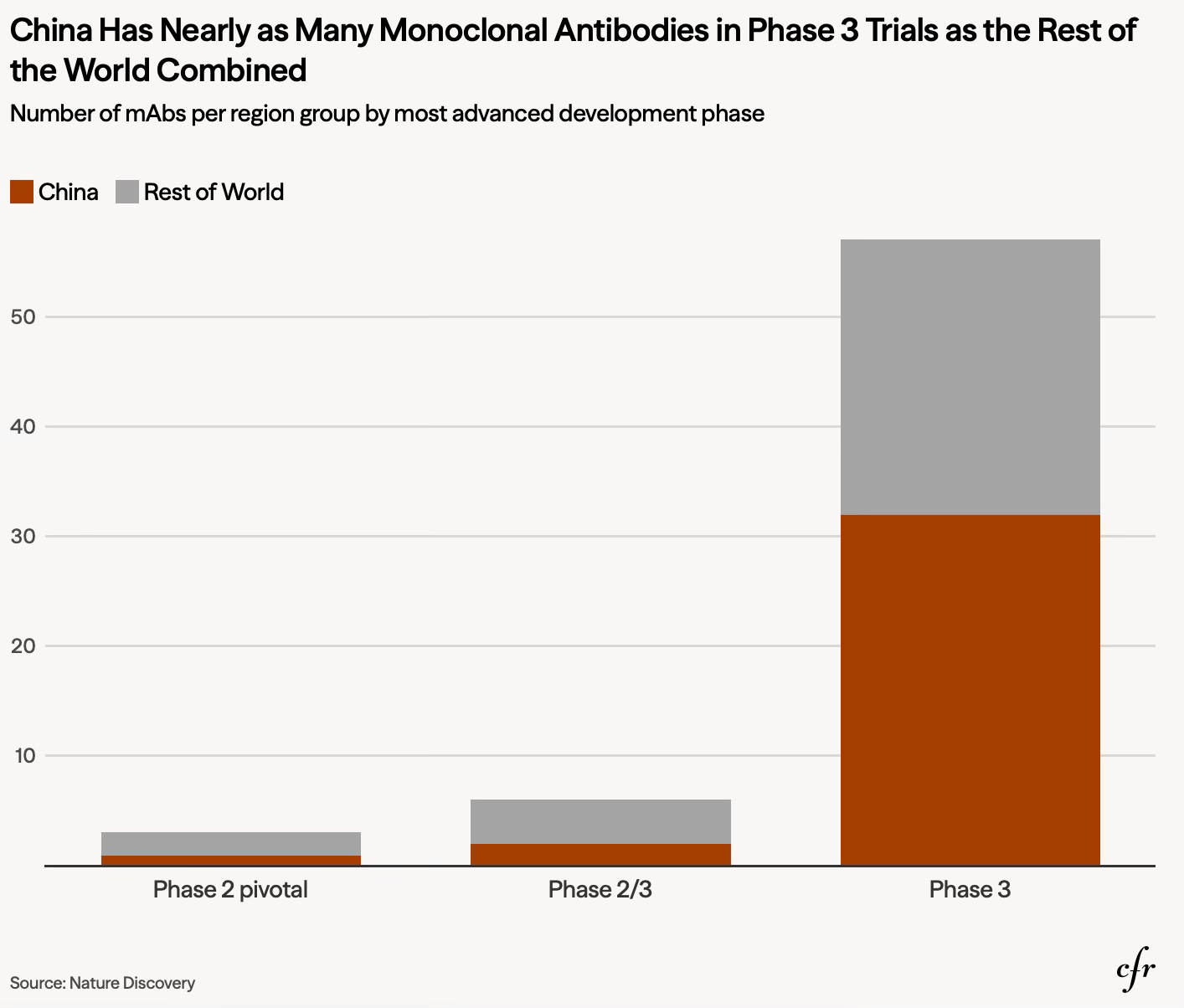
Newer and developing therapeutic areas are also at risk of becoming reliant on China. In the report, we discuss monoclonal antibodies, a category of therapeutic that includes drugs like Humira and Keytruda; monoclonal antibodies are increasingly being developed in China. The same is true for synthetic DNA, an area that may result in many future gamechanging therapeutics.
Finally, the report went into detail about possible policy options to address each of the areas of U.S. dependence (the full list is available in the appendix of the report).
As we were writing the report, it became clear that many of the policy changes that would improve U.S. resilience are best accomplished through executive agencies like the Department of Health and Human Services (HHS) or the Department of Commerce. That means these changes require a commitment to industrial policy from the executive branch (possibly prompted by Congress) to kickstart the process. Of course, that’s a difficult proposition — but an important one.
I’ll be taking on some consulting projects for aligned biotech companies, venture firms, or other interested parties. If that’s relevant, please reach out.